FOREX.com vs CMC Markets (2026): Which Is Better for Canadian Traders?
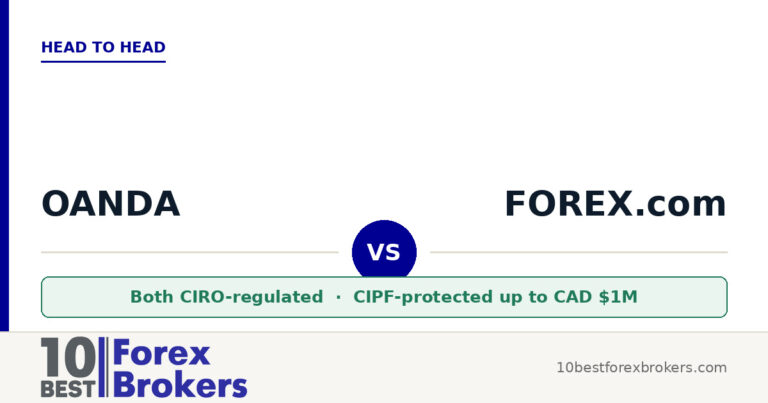
Both offer broad market access under CIRO regulation. The difference is mostly platform philosophy. Both are regulated by CIRO and both carry CIPF protection up to CAD $1 million, so this is not a safety comparison — it is a fit comparison. Here is how they actually differ.
How we make money & how we research
We may earn a commission if you open an account through some links on this page, at no cost to you. We do not test brokers with live-funded accounts; our ratings are built from regulatory records (CIRO, CIPF, provincial regulators), public disclosures, and documented broker terms. See our methodology and affiliate disclosure. Trading forex and CFDs carries a high risk of loss.
The short answer
FOREX.com if pair count and research output matter most. CMC Markets if you want the Next Generation platform’s charting and risk tools.
Both are CIRO-regulated and CIPF-protected. Trading involves risk of loss.
Side by side
| FOREX.com | CMC Markets | |
|---|---|---|
| Canadian entity | FOREX.com Canada (StoneX group) | CMC Markets Canada Inc. |
| Regulation | CIRO-regulated · CIPF-protected up to CAD $1M | CIRO-regulated · CIPF-protected up to CAD $1M |
| Founded | 2001 | 1989 |
| Platforms | Web Trader, MetaTrader 4/5, TradingView integration | Next Generation, MetaTrader 4 |
| Markets | Forex plus a broad CFD range | Forex and a very extensive CFD range |
| Minimum deposit | Low stated minimum; check the current account documentation | No stated minimum deposit |
| Cost structure | Choice of spread-only and commission-based account structures | Primarily spread-based pricing |
| Main strength | Very wide currency pair selection and strong research and analysis output | The Next Generation platform’s charting and risk tooling is among the best available anywhere |
| Main limitation | The account-type choice adds complexity for newer traders deciding how they will be charged | The sheer number of instruments and platform features can overwhelm newer traders |
Figures change. Minimum deposits, spreads and commission schedules are set by the brokers and revised periodically — always confirm the current numbers on the broker’s own site before you open an account. Our full reviews of FOREX.com and CMC Markets go deeper on each.
Regulation and safety
Both firms operate through Canadian entities registered with the Canadian Investment Regulatory Organization. That means segregated client funds, capital adequacy requirements, complaint and dispute-resolution processes, and CIPF coverage of up to CAD $1 million per account category if the firm becomes insolvent.
It is worth stating plainly what CIPF does and does not do. It protects against the failure of the dealer. It does not protect you against losing money on your trades — nothing does. A regulated broker is a floor, not a guarantee of outcomes.
You can verify both firms’ current registration independently with our CIRO broker checker, and we would encourage that rather than relying on any comparison page, including this one.
Platforms
FOREX.com offers Web Trader, MetaTrader 4/5, TradingView integration. Very wide currency pair selection and strong research and analysis output.
CMC Markets offers Next Generation, MetaTrader 4. The Next Generation platform’s charting and risk tooling is among the best available anywhere.
Both firms provide demo accounts. Given that platform preference is largely a matter of how a given interface fits the way you think, spending a week in each demo will tell you more than any amount of reading — including this page.
Costs
FOREX.com: Choice of spread-only and commission-based account structures. CMC Markets: Primarily spread-based pricing.
The comparison that matters is total cost on the specific pairs you trade, at your actual volume, including any inactivity or withdrawal fees. A tighter headline spread can be more expensive once commission is added, and a commission structure can be cheaper for a frequent trader than a wider spread-only quote. Pull the current published schedules for both, apply your own monthly volume, and compare the total.
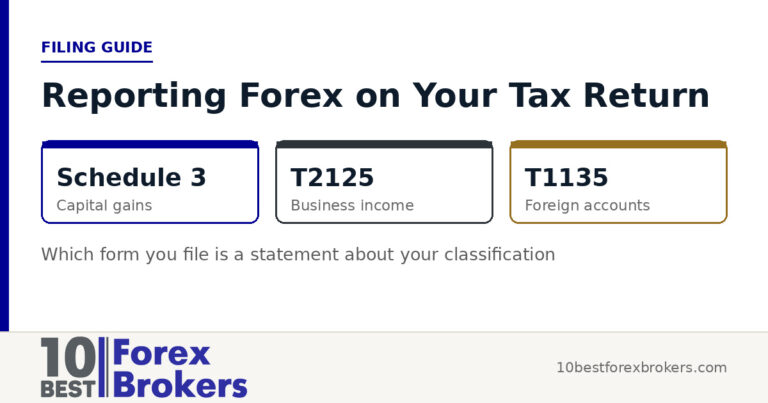
Do not overlook currency conversion. If you fund in CAD and the account is denominated in USD, you pay a conversion cost at both ends that can easily exceed the spread difference you were optimising for. Our tax guide covers why this matters at filing time too.
Who each one suits
FOREX.com fits active forex traders who want breadth of pairs and a choice of pricing model. Its main limitation is that the account-type choice adds complexity for newer traders deciding how they will be charged.
CMC Markets fits traders who want serious charting and a very wide instrument range from a regulated Canadian entity. Its main limitation is that the sheer number of instruments and platform features can overwhelm newer traders.
If you are still undecided, our broker quiz narrows it down by what you actually trade, and the full comparison table covers every CIRO-regulated option rather than just these two.
Frequently asked questions
Is FOREX.com or CMC Markets better for Canadian traders?
Neither is better in the abstract — they suit different traders. Both are CIRO-regulated and CIPF-protected, which means the safety question is settled for both. FOREX.com tends to suit active forex traders who want breadth of pairs and a choice of pricing model. CMC Markets tends to suit traders who want serious charting and a very wide instrument range from a regulated Canadian entity. The right answer depends on what you actually trade and how often.
Are both FOREX.com and CMC Markets legal in Canada?
Yes. Both operate through CIRO-regulated Canadian entities and client assets are covered by CIPF up to CAD $1 million in the event of insolvency. You can confirm current registration yourself using the CIRO broker checker rather than taking anyone’s word for it, including ours.
Which has lower costs, FOREX.com or CMC Markets?
It depends on what and how much you trade. Spread-only pricing tends to favour lower-frequency traders; commission-based pricing with tighter raw spreads tends to favour high-volume traders. Both firms publish current schedules, and those schedules change — check them directly for the specific pairs you trade before deciding.
Can I have accounts with both?
Yes, and some traders do. There is nothing preventing you from holding accounts at more than one CIRO-regulated broker, and it can make sense if you want different platforms for different purposes. The practical costs are the time spent managing both and the additional record-keeping at tax time.
Does either offer TFSA or RRSP accounts for forex?
Registered accounts are generally not available for leveraged forex and CFD trading, because those positions do not fit within the qualified investment rules. Some brokers offer registered accounts for their conventional investing products while excluding forex. Our guide to forex trading taxes in Canada explains why this restriction exists.